We use cookies to enhance your experience. Essential cookies are required.
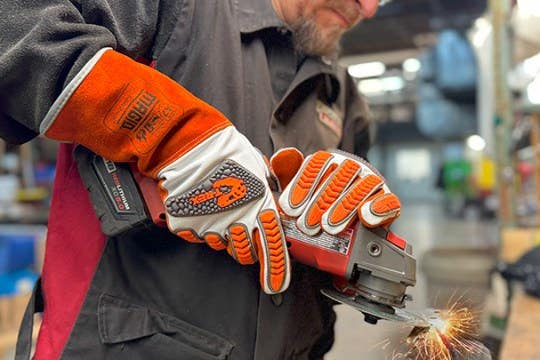
Why Choose Leather for PPE Hand Protection?
Leather’s versatility and durability has made it a preferred PPE material for centuries. Learn why leather continues to be used in PPE innovations with Magid.
Read More
Leather has been used for centuries because of its unique combination of strength, flexibility, and durability. Its versatility continues to make it a preferred material for many everyday products—from car upholstery and furniture to footwear. In personal protective equipment (PPE), leather remains a trusted and proven choice, even as textile technologies continue to evolve.

Leather 101
Grain vs. Split Leather
Available in premium, mid-range & standard grade
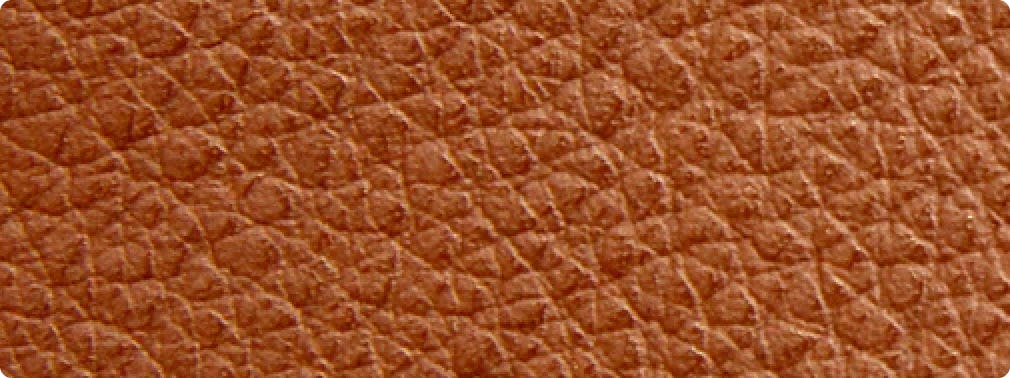
GRAIN LEATHER
The uppermost layer with the natural grain. Strongest and most durable with high abrasion resistance and breathability. Premium choice for driver gloves and heavy-duty applications.
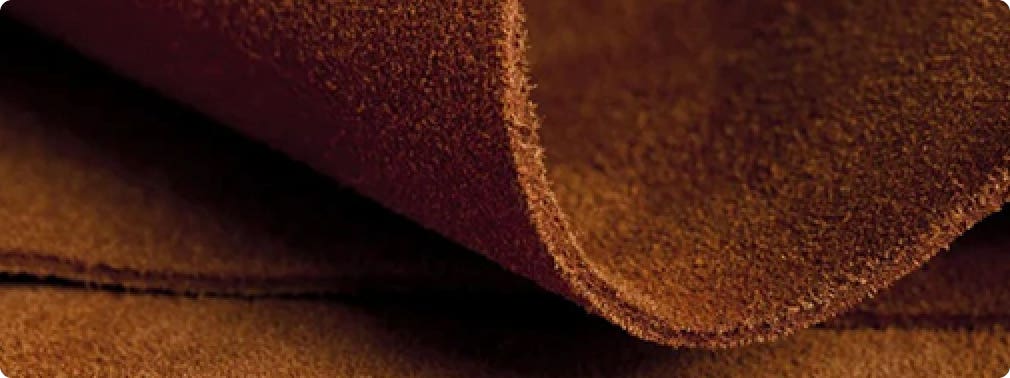
SPLIT LEATHER
The layer(s) beneath the grain—softer and more fibrous. Types include side split (strongest), shoulder split (moderate), and belly split (softest/least consistent). Common in welding and heat-resistant gloves because the rough fiber grips well and tolerates heat. Magid primarily uses cow and deer split leather.
When it comes to frontline protection, leather excels. It is widely used in welding garments to protect the body from heat, sparks, and light spatter, and it remains a staple material in protective gloves for reliable hand protection. While some leather glove designs have existed for decades, modern leather PPE continues to evolve.
Innovations in Leather Work Gloves
Today’s leather gloves incorporate innovative enhancements such as:
- TPR (thermoplastic rubber) for added impact protection
- Specialized coatings, including oil-block treatments to resist oils and other substances
- Protective linings to improve cut resistance and contact heat protection
- Advanced construction techniques that improve dexterity without compromising safety
Leather’s naturally high abrasion resistance contributes to dependable performance and longer product life, making it a cost-effective and reliable option in demanding work environments.
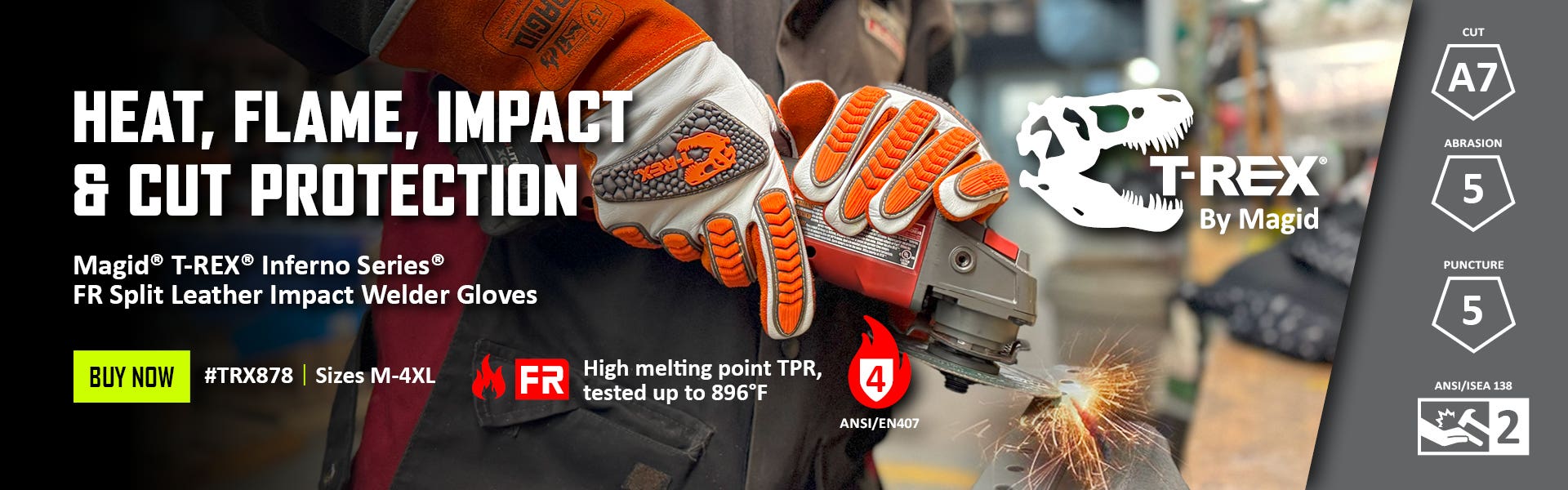
A variety of leather sources exist, each suited to specific applications and performance needs—from welding garments and gloves to specialty styles like the popular T-REX® gloves. Regardless of the application, leather continues to be the essential material that protects workers’ hands and helps them get the job done.

Leather Comparison
COWHIDE
Durable, abrasion resistant, most common in industrial gloves, cost-effective.

GOATSKIN
High tensile strength (natural lanoline in the hide), excellent abrasion resistance, lightweight and durable.

PIGSKIN
Very porous, stays flexible when wet, excellent breathability, quick-drying.

DEERSKIN
Excellent tactile sensitivity, natural "broken-in" feel, resistant to tearing.
| Feature | Cowhide | Goatskin | Pigskin | Deerskin |
|---|---|---|---|---|
| Durability | ★★★★ | ★★★★ | ★★★ | ★★★ |
| Softness/Comfort | ★★★ | ★★★★ | ★★★ | ★★★★★ |
| Dexterity | ★★★ | ★★★★ | ★★★ | ★★★★★ |
| Wet Performance | Medium | Good | Excellent | Excellent |
| Breathability | Moderate | Good | Excellent | Good |
| Cold Flexibility | Fair | Good | Good | Excellent |
| Cost | Low-Medium | Medium | Low | High |
Beyond performance, leather also supports sustainability efforts. As a byproduct of the food industry, leather contributes to a more efficient circle of life, helping reduce waste and minimize environmental impact—while continuing to provide the protection workers depend on.